
Queer feminist reading and archives - remembering we have always been here
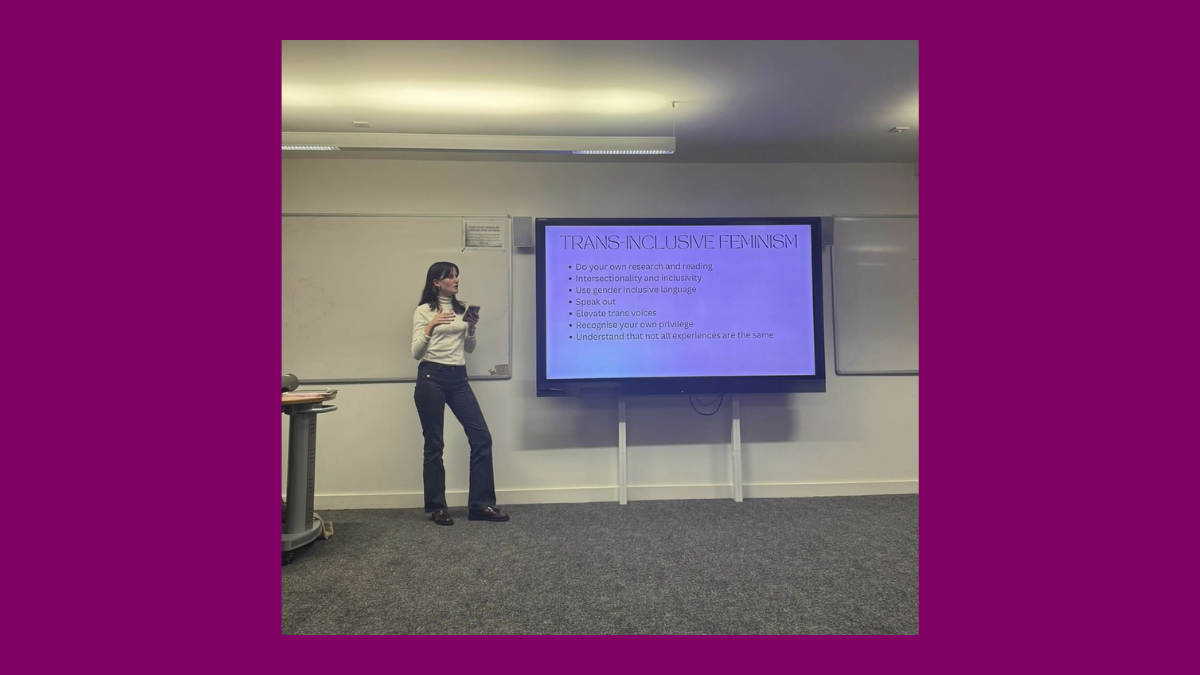
Photograph by Thulsa Moosa.
Ione Gildroy, queer officer at Girl* Up Edinburgh, reflects on queer feminist reading and archives, and how looking to history can give strength and inspiration.
I vividly remember reading a book by comedian and presenter (and lesbian) Sandi Toksvig when I was maybe 8 or 9, called ‘Girls Are Best,’ which was probably my first proper exposure to feminism or to the idea that gender equality really didn’t, and doesn’t exist.
As an only child of a single mother, I was surrounded by strong women growing up, especially my mother and grandmother. This made me all the more surprised when later on, I learnt that the reality of my early life experiences was not reflected in, and indeed was countered by the many gendered stereotypes I would face. I was always a voracious reader and would read any book about feminism I could get my hands on, fiction or non-fiction. I enjoyed Holly Bourne’s trilogy ‘The Spinster Club,’ a series which tackled a range of issues, from mental health to everyday sexism.
Reading plays an integral role to my journey as a feminist and to my understanding of myself. Without discovering books such as Chimamanda Ngozi Adichie’s ‘We Should All Be Feminists,’ Caroline Criado Perez’s ‘Invisible Women’ and Rebecca Solnit’s ‘Men Explain Things to Me,’ my feminism wouldn’t be so developed and intersectional, and I would not have been inspired to pursue courses such as Understanding Gender in the Contemporary World. I wouldn’t then have had the chance to read Kimberlé Crenshaw, Judith Butler and Andrea Dworkin, and really form my own feminism. In my French degree too, I have been able to explore Simone de Beauvoir.
These classes showed me the importance of feminist spaces to share ideas, uplift voices and subvert societal norms. And it was with this that I was drawn to Girl* Up, and the chance to discuss issues in a safe space, as well as work on campaigns that really matter.
What’s also been important in my journey as a feminist is archives and exhibitions that highlight how the fight and struggle for equality has developed and changed over time, and how women’s roles in society have been able to change because of this.
When I went to the recent exhibition at the Scottish National Gallery Modern Two, Women in Revolt, I felt a real sense of belonging in and understanding of past feminist movements. Knowing that other women have felt the same things and fought the same fights is really important.
As queer officer at Girl* Up, as a lesbian feminist, I also found the dedicated section of the exhibition on this really spoke to me. Sometimes it can be hard, as a queer person, to feel a sense of complete belonging in all feminist spaces, when some may look down on your sexuality or gender identity. Discovering writers, artists and activists who highlighted queer and lesbian issues in their feminism reminds us that we have always been here, and that we will always be here.
In 2023 I went to a talk at Portobello Pride by Ashley Douglas, who discussed her research and writing about 16th century poet Marie Maitland. Marie was a poet who wrote in Scots, who was ahead of her time as a woman, and who wrote poetry about her love for women. Marie has been described as Scotland’s Sappho because of this writing on sapphic love. When I first heard about Marie, I felt a sense of comfort and affirmation in myself, my identity.
Archives and reading - history and literature - allow us to feel a sense of belonging with those who have come before us. This builds us up and makes us feel less alone in any fight, especially as women with multiple marginalised identities, be that race, sexuality, class, disability. As feminists, sometimes looking to history can give us the strength and inspiration to continue into the future.
Author Bio:
Ione (she/her) is a final year French and Italian student who is queer officer at Girl* Up Edinburgh. She has been involved with student media throughout her time at Edinburgh and is an aspiring journalist.