
International Women’s Day: reflections on gender-based violence in globalised contexts
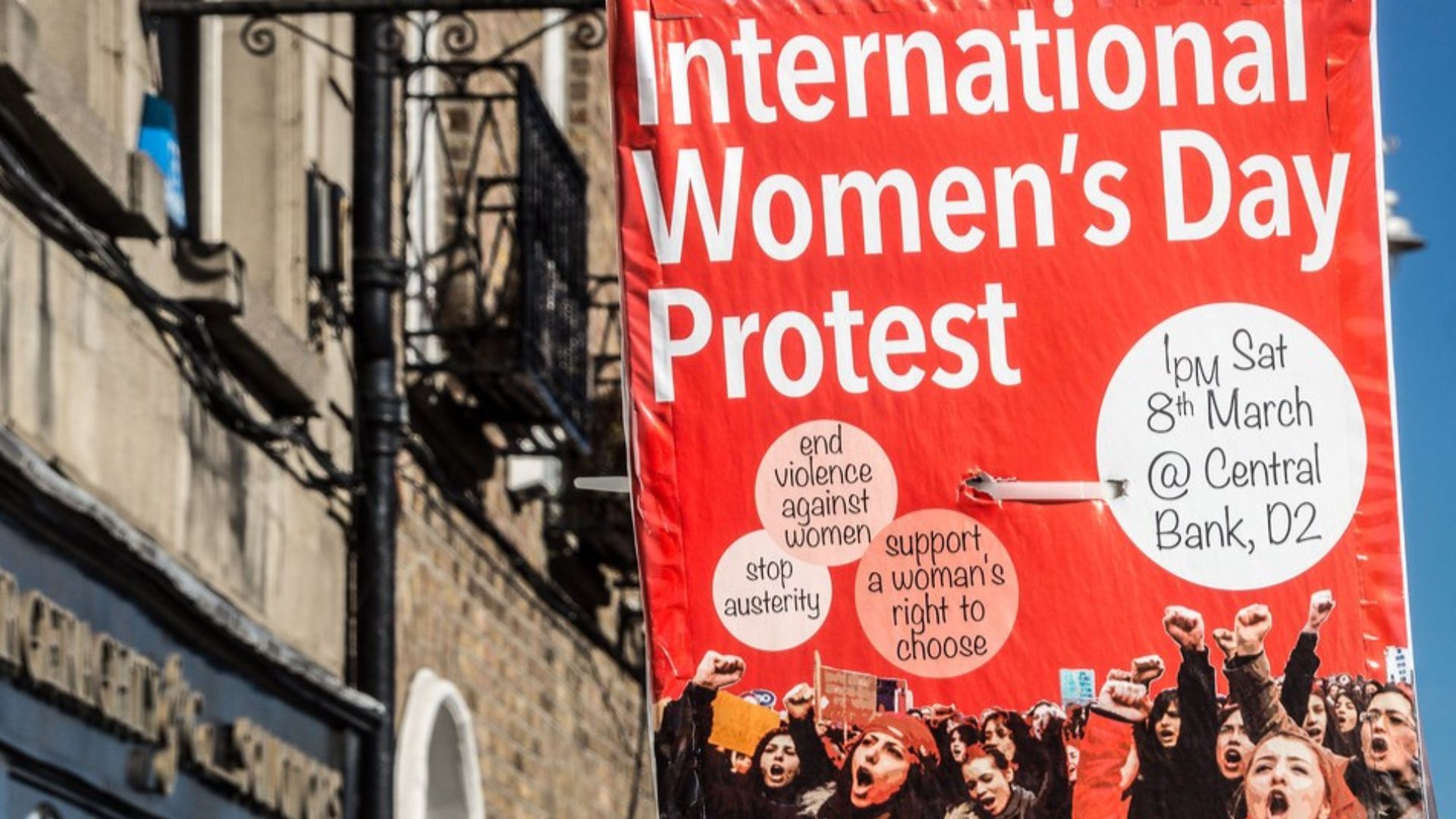
"International Women's Day Protest" by infomatique is licensed under CC BY-SA 2.0.
As we celebrate International Women’s Day, Kaveri Qureshi reflects on a key concern of women’s movements globally – gender-based violence, with a special focus on the transnational dynamics of feminist discussions on it.
As we celebrate International Women’s Day this week, I find myself reflecting on a key concern of women’s movements globally – gender-based violence, with a special focus on the transnational dynamics of feminist discussions on it. I will start with a memory from five years ago.
On International Women’s Day in Edinburgh in 2020, gathering at Bristo Square ahead of marching down to Princes Street, some Latin American university colleagues passed around printouts of Un Violador en Tu Camino – A Rapist in Your Path – organised us into socially-distanced circles and taught us the accompanying dance moves. We sang in Spanish and in English.
This Chilean protest performance about rape culture and victim shaming started in November 2019 by a feminist group called Las Tesis in the middle of protests in Santiago. As Julie Cupples (2022) explains, the performance went viral and was performed across Latin America and beyond, including in New York outside the court where Harvey Weinstein was being tried. It was “creatively adapted to different contexts with different kinds of grassroots organizing” (p.146-7). Paula Serafini (2020) appreciates it for its horizontal ethos of collective ownership, its open and porous organising processes and its accessibility, “giving rise to performances where wheelchair users join the frontlines, and others where participants maintain the basic choreography while reproducing the lyrics in sign language” (p.293). Further, despite its simplicity and fluidity, it is “aesthetically stunning, and affectively moving”; “[t]he song puts into words that which has been silent for too long: It is the system that is killing us. It is the government officials and police officers. It is the judges. It is you. Participants in the performance are speaking truth to power in a collective act of denunciation that marks a point of no return: We are no longer silenced, and you are no longer shielded” (p.294). This prefigurative, participatory quality became transnational in scope.
In their edited book Intimacy and Injury: In the wake of #MeToo in India and South Africa, Srila Roy, Nicky Falkof and Shilpa Phadke (2022) write about how transnational discussions over gender-based violence elide “grey zones of violence, the tensions within feminism, the limited space for marginalised genders and sexualities” (p.2). We need to do more to address these aspects. They also write critically of how the global south has “historically functioned to confirm the fact of violence”, but has “been seen less as a site of feminist struggle around such violence, than as part of the making of feminist subjects elsewhere” (ibid.), these memories perhaps capture small but necessary moments of engaging the work and histories of feminist organising from the global south.
Following through with these thoughts about transnational feminist discussions, this year to celebrate International Women’s Day, at 11am today - Friday, 7th March - Dr Qazi Sarah Rasheed and Dr Hamide Elif Üzümcü are discussing Muslim women and gender equality in India and Türkiye.
Then, in the evening, at 6.45pm the University’s Annual International Women’s Day Lecture, titled ‘Only a day, only a theme and an initiative?’, is being given by Naeema Yaqoob Sajid. Please come along if you can! For further details, see the ‘Upcoming events’ tab of the GENDER.ED website.
Author Bio:
Kaveri Qureshi is a Senior Lecturer at the School of Social and Political Science, and an Associate Director of GENDER.ED.
References:
1. Cupples, J. (2022). The coloniality of sex and gender. Chapter 6 in Development and Decolonization in Latin America. Routledge.
2. Roy, S., Falkof, N., & Phadke, S. (2022). Introduction. Chapter 1 in Falkof, N., Phadke, S & Roy, S. (Eds). Intimacy, injury and# MeToo in India and South Africa. In Intimacy and injury. Manchester University Press.
3. Serafini, P. (2020). ‘A rapist in your path’: Transnational feminist protest and why (and how) performance matters. European Journal of Cultural Studies, 23(2), 290-295.