
Ten years on: Sex, Gender Gaps and Scottish Independence
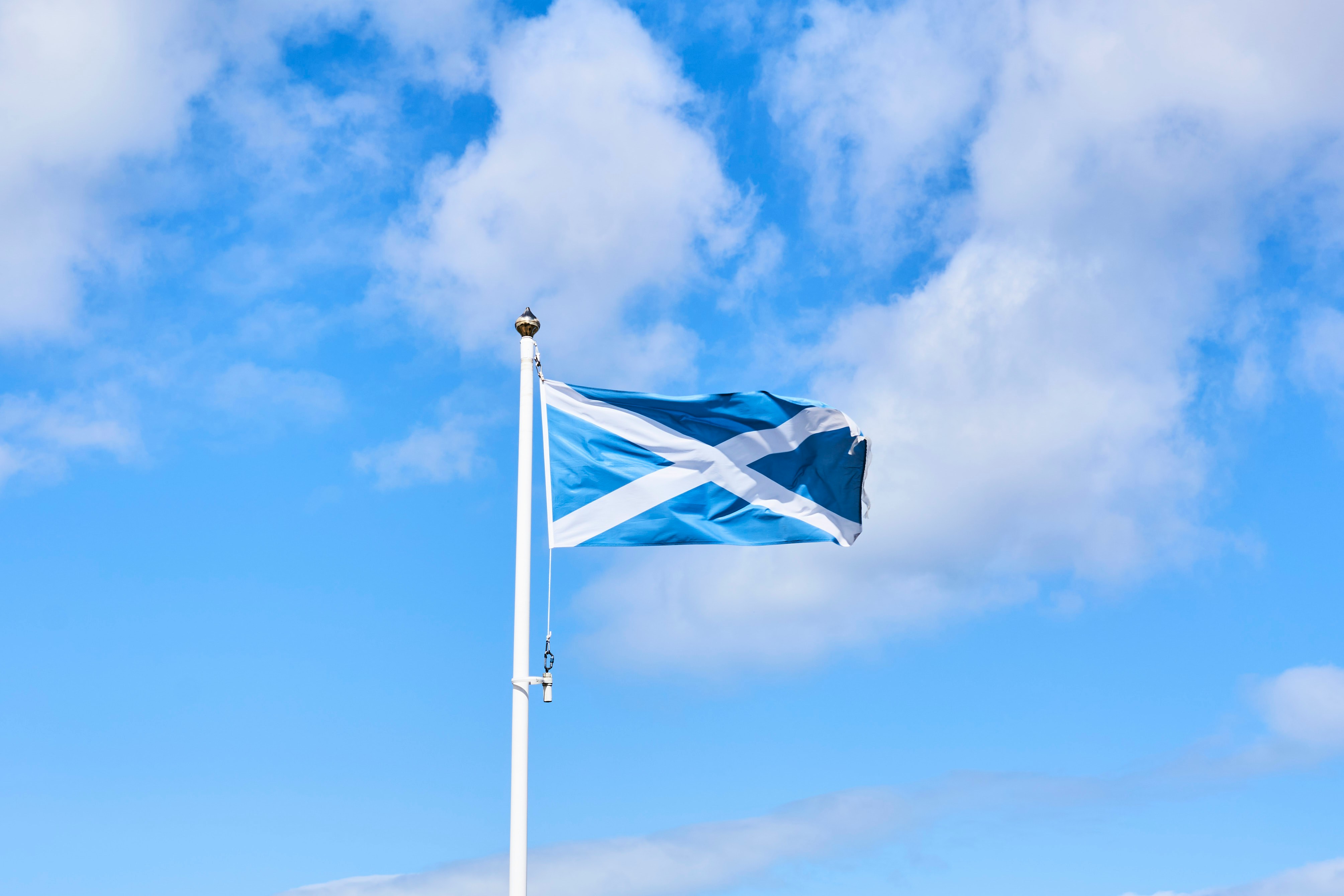
Photo by Garvit Nama on Unsplash.
Ten years ago, on the 18th of September 2014, Scotland voted against independence by a narrow 10.6 per cent margin. Voting behaviour scholars analysing the referendum results found that male voters were more likely than female voters to support independence by a wide nine per cent margin (Henderson et al., 2014). Conversely, female voters were more likely to vote against independence than male voters by ten percentage points (Henderson et al., 2014) and in pre-referendum waves, were more likely to feel undecided about independence. This sex gap was not new, however, and had been a well-known feature of Scottish elections, with similar patterns persisting since the 1990s. Before 2014, similar sex gap patterns in constitutional attitudes were evident in other established democracies such as Catalonia and Canada. Yet, across all cases, knowledge gaps remain regarding which women and men differ in their constitutional attitudes, to what extent, and why.
The Scottish Case
The Scottish case poses an interesting case for a multitude of reasons. Firstly, Scotland as a case is empirically rich due to the amount of quantitative voting behaviour data available as voting behaviour surveys have been conducted since the 1970s. As a data source, these surveys provide a deep-rooted foundation to explore voting behaviour and constitutional attitudes over time. Next, the referendum offered the Scottish electorate a unique opportunity to influence democratic and constitutional processes directly. Constitutional change, such as referendums, propose the altering and restructuring of established political power structures as constitutions act as power maps (Duchacek, 1973). Scholars have found that in times of constitutional change, those that have been historically left out of constitutional structuring, such as women and minority groups, will envisage constitutional change as the vehicle to gaining more power in their lives (Irving, 2018). This is particularly true in the case of Scottish devolution, in which feminist constitutionalist activism was seen to be a success (Bell and Mackay, 2012). From a feminist lens, this is interesting as scholars have posited as to why independence has proven less favourable amongst female voters when women’s movements championed for more constitutional power in Scotland (Mackay, 2014). Lastly, although the 2014 referendum result signalled the end to the fight between the opposing campaigns, Yes Scotland (the pro-independence campaign) and Better Together (the unionist campaign), the constitutional question of Scotland’s future with the rest of the United Kingdom (UK) has remained at the forefront of the most recent 2021 Scottish Parliament election(Johns, 2021).
Referenda and Constitutional Change
Whether and how citizens of a polity choose to restructure their political institutions through constitutional change has vast consequences on the polity’s future. For example, in 2018, Ireland voted to repeal the Eighth Amendment, which had been added in 1983 to grant equal rights to the life of the mother and the unborn, effectively banning most abortions. On May 25, 66.4% of voters supported the repeal. Another example of constitutional restructuring can be seen in Tunisia, after 2011, when the polity adopted a new constitution which established a multiparty democracy with strong guarantees for civil liberties and gender equality.
Institutions have remained a key interest in political science research, yet the relationship between institutional change and public opinion has been underdeveloped in the UK until recently (Wenzel et al., 2000). Referendums serve as a crucial type of constitutional reform to study voting behaviour as citizens are given an opportunity to directly influence power structures in the polities that they live in. Yet, the gendered nature of constitutions has often been overlooked by UK voting behaviour scholars investigating sex and gender gaps in constitutional attitudes. Further, traditional approaches to understanding the sex gaps have often conflated sex and gender in their quantitative analyses and further homogenised gendered voting blocs (Campbell, 2006; Bittner and Goodyear-Grant, 2017).
Conflating sex and gender can be problematic for several reasons, as it oversimplifies complex concepts and can lead to misunderstandings, misrepresentations, and inequalities (Bittner and Good-year Grant, 2017). Sex can refer to biological attributes such as chromosomes, hormones, and reproductive organs, typically categorized as male or female. Gender, however, refers to the roles, behaviours, and identities that societies attribute to people, often labelled as masculine or feminine (Lovenduski, 2005). Gender is a social construct and can vary across cultures and individuals. Conflating the two ignores the fact that gender is not biologically determined but socially and personally defined (Campbell, 2006). When sex and gender are conflated, it marginalizes non-binary, transgender, and gender non-conforming individuals whose gender identity does not align with their biological sex. This can lead to exclusion from social recognition, legal protections, and healthcare. The flattening of the gender variable into a dichotomous variable (only using man and woman as measures) also leads to inaccurate data which leaves out a portion of the population and may erase trans identity. Treating sex and gender as the same reinforces outdated stereotypes about "male" and "female" behaviour. It assumes that biological sex dictates certain behaviours or preferences, which overlooks individual diversity and personal identity.
Research Design
In order to get at gendered nuances in relation to the sex gap, my doctoral research approached the sex gap puzzle in Scotland differently by using a feminist problem-driven approach which acknowledged how both political and societal power structures can influence political belief systems and behaviours. I collected data from 2019-2021 utilising both a top-down and a bottom-up approach to centre gendered experiences concerning the Scottish constitutional question. I conducted a secondary analysis of all quantitative voting behaviour surveys in Scotland relevant to measuring constitutional attitudes. Then, through the application of a large-scale quantitative voting behaviour survey (n=1214), I surveyed voter’s experiences and contextualised their voting history. I contacted participants to engage in ten focus groups and approximately 80 interviews from the survey. Lastly, I explored the gendered nature of the independence campaigns by conducting 22 elite background interviews with campaign and board members of the Yes (pro-independence) and No (anti-independence) campaigns.
Voters were separated into gender subgroups (Campbell, 2006) principally by their gender and vote choice and then further grouped based on intersecting aspects of their identity, such as age, national identity, location and birthplace. Voters were then asked to describe what they believed most influenced their constitutional attitudes.
Findings
The amount of data collected yielded a variety of crucial findings. Broadly, data illustrated the need for research models which acknowledge and investigate voter heterogeneity. Research which investigates sex gaps only through bivariate models is overly simplistic and fails to get at the cause of sex gaps. A one-size-fits-all to understanding men’s and women’s voting behaviour flattens gendered understandings of voters and, from an intersectional lens, lumps all women and men together through essentialising conclusions.
Next, my doctoral work makes a case for how the relationships between sex, gender, voting behaviour and constitutional attitudes must be untangled to offer a deeper understanding of gendered voting behaviour, particularly concerning constitutional questions. For example, I found that women who supported independence conceptualised power differently than men who supported independence. Going further, younger pro-independence men conceptualised state-empowerment. In contrast, pro-independence women were more likely to vote for independence because they believed it would bring more empowerment to their lives.
Further, the work in my thesis provided a wealth of thick empirical data which illustrated the importance of the relationship between campaigns and voters. Elite background interviews demonstrated that the respective campaigns were highly gendered in various frames. Firstly, female Yes and No actors from both campaigns regarded the campaigns as male-dominated. Next, elite background interview findings illuminated the extent and importance that the sex gaps had on the structuring of the campaigns and how campaigns targeted voters. Findings highlighted that voters were targeted in highly gendered ways, such as working-class women at grocery stores, mothers through coffee mornings with free childcare, and working-class men targeted through patriotic messaging. All campaigns used message carriers, which they believed to attract gendered voter subgroups.
Future Pathways
Understanding how constitutional attitudes are expressed in voting behaviour offers insight into how citizens envisage societal power relations. Societal power relations are inherently gendered (Connell, 2013). Constitutional change offers voters a critical juncture to consider big issue questions in political science, such as citizenship, democracy, representation, agency and equality. As power is structured, restructured and reformed through constitutional structures, inequalities such as gender or race inequality can be addressed.
The existence of sex gaps in political attitudes indicates a difference in the gendered experiences of those within the political society and illustrates contesting perceptions of constitutional futures. To understand power structures in a political society, sex and gender must be isolated and examined in the frame of other intersecting aspects of citizen identity. As political science primarily concerns how institutions exercise and distribute power locally and globally, understanding gender differences in power conceptualisation is paramount.
Dr Emilia Y Belknap (she/her) is currently a Politics and International Relations Research Fellow at the University of Southampton. In October 2023, she submitted her PhD, ‘Sex, gender and constitutional attitudes: voting behaviour in the Scottish independence referendum’, to the University of Edinburgh’s School of Social and Political Science. Dr Belknap’s thesis explores the complex relationship between sex, gender and voting behaviour by focusing on the under-researched dimension of support for constitutional change. Using a mixed-method feminist approach, Belknap’s thesis highlights the importance of lived experiences and identities on constitutional attitudes.
References
Bell, C. and Mackay, F. (2013) ‘Women and Constitutional Debates: Engendering Visions of a New Scotland’, in G. Hassan and J. Mitchell (eds) After Independence. Edinburgh: Luath Press, pp. 259–271.
Bittner, A. and Goodyear-Grant, E. (2017) ‘Sex isn’t Gender: Reforming Concepts and Measurements in the Study of Public Opinion’, Political Behavior, 39. Available at: https://doi.org/10.1007/s11109-017-9391-y.
Campbell, R. (2006) Gender and the Vote in Britain: Beyond the Gender Gap. Oxford: ECPR Press.
Duchacek, I.D. (1973) Power Maps: comparative politics of constitutions. Santa Barbara, Calif: ABC-Clio.
Henderson, A. et al. (2014) Scottish Referendum Study 2014 - Economic and Social Research Council. UK Research and Innovation. Available at: https://esrc.ukri.org/research/our-research/scottish-referendum-study-2014/ (Accessed: 1 May 2018).
Irving, H. (2017) Constitutions and Gender. Edward Elgar Publishing.
Johns, R. (2021) ‘As You Were: The Scottish Parliament Election of 2021’, The Political Quarterly, 92(3), pp. 493–499.
Lovenduski, J. (2005) Feminizing Politics. Cambridge: Polity Press.
Wenzel, J.P., Bowler, S. and Lanoue, D.J. (2000) ‘Citizen Opinion and Constitutional Choices: The Case of the UK’, Political Behavior, 22(3), pp. 241–265.