
Farah Taleb – ECR Spotlight
In the first of our ECR Spotlight Series for 2023, Farah Taleb writes about the representation of women from the Middle East North Africa (MENA) region. This piece follows the Academic Writing for the Public workshop that GENDER.ED conducts annually.
Women: Artists or Theme?
By Farah Taleb
Since the early 2000s, western museums and galleries have been increasingly exhibiting works by artists from the Middle East and North Africa (MENA). This recent interest was partly due to the globalisation of the art world since the 1990s. However, for women artists from MENA, there were other factors that contributed to this rising attention, including the politically charged context after the events of 9/11, the ‘war on terror’, and the debates around a ‘clash of civilisations’ (summary) between the west and Islam. And within this context, the topic of women and their ‘life under Islam’ became one of the most controversial and debated matters. These tropes started to appear in the art world soon after.
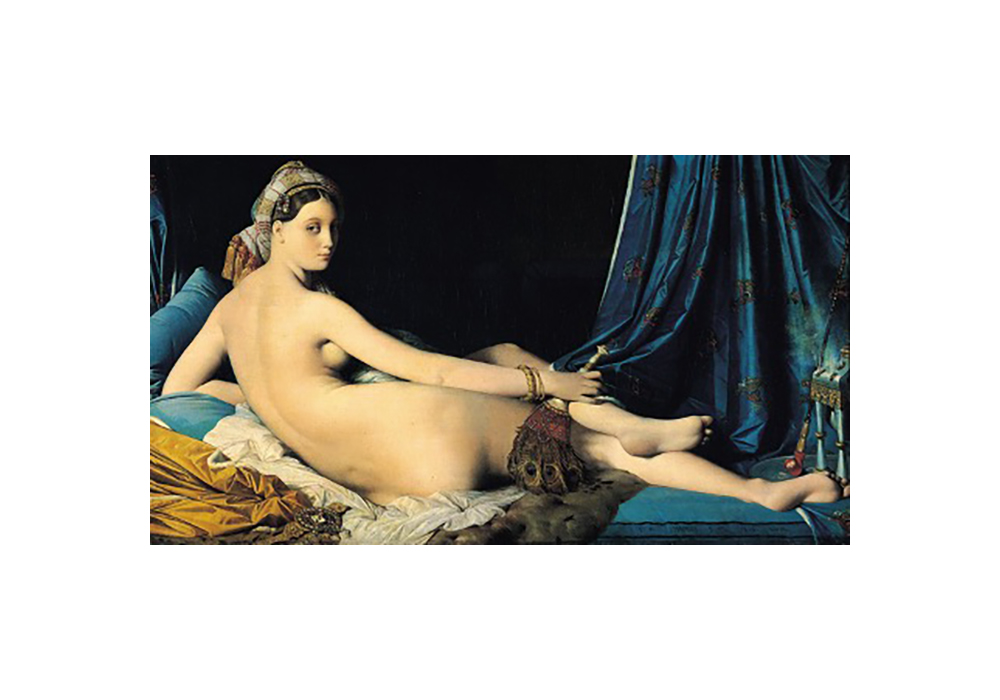
The topic of ‘Muslim women’ or ‘Oriental women’, of course, is not new to western discussions and representations of Islam and the Middle East as it was highly visible in Orientalist studies and art. However, these representations were mostly done by European men who had little to no contact with Middle Eastern women. Their work was marked by stereotypes and hypersexualised tropes of the harem that dominated the western perception of gender under Islam for a long time (figure 1, 2).
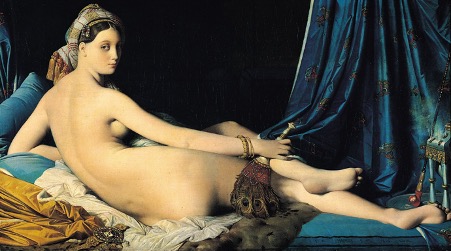
Figure 1 Jean Auguste Dominique Ingres, La Grande Odalisque, 1814, oil on canvas, 88.9 x 162.56 cm. Louvre, Paris.
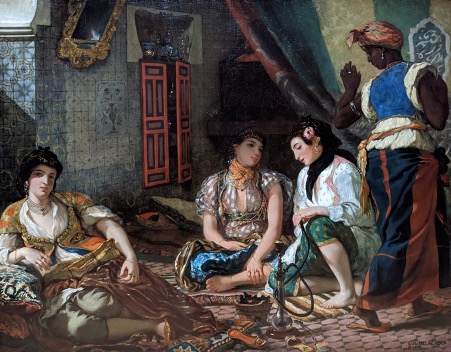
Figure 2 Eugène Delacroix, Women of Algiers in their Apartment, 1834, Oil on canvas, 180 × 229cm. Louvre, Paris.
With new exhibitions curated roughly since the early 2000s, an interesting shift has occurred: namely, the lives, images, and topics of women in MENA are now being presented by women from MENA. At first, this seems like a significant change that would allow women artists and curators from the region to reclaim agency over their bodies and voices that have been overshadowed and scrutinised for centuries. Yet their agency and role within the museum space is compromised by the choices and interpretations by western museums and curators, as I will discuss here.
In the early 1990s, a series of photographs by Shirin Neshat, an Iranian born artist based in the US, grabbed the attention of western galleries and audience. Neshat created the series Women of Allah (figure 3) following her first visit to Iran after the revolution and the eight years’ war with Iraq, moved by the wave of changes that occurred in the society within her fifteen years away. The monochromatic series was composed mostly of photographs of a woman, the artist herself, veiled, her face covered in Persian script and holding a weapon. Neshat’s 1993 exhibition provoked considerable debate mostly focused on the meaning of the veil and the artist’s political opinion. Interpreted as feminist and empowering women by some, accused of fundamentalismand glorifying the revolution and Islamic regime by others, the work continues to be a source of debate today.
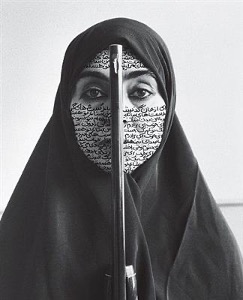
Figure 3 Shirin Neshat, Rebellious Silence, 1994. B&W RC print and ink. © Shirin Neshat.
Following Neshat, many women artists from the region started receiving attention from western museums, but a certain pattern could be seen in the kind of art that was most widely circulated. Many, if not most, artworks chosen consisted of photographs of veiled women with elements that refer to Islamic or middle Eastern culture. The concepts, motives and contents of these artworks are different. The artists, living in different societies, reflected experiences, ideas, and social commentaries through their work. Lalla Essaydi’s work (figure 4), for example, was a reflection on her life in Morocco, and a response to the French male orientalist depiction of women. Shadi Ghadirian’s work (figure 5),on the other hand, merged the Qajar period photographs with modern day objects, offering the artist’s observations and commentaries on the lives of Iranian women. Yet, when presented together, these nuances and diversity would be masked by the unified homogenous titles or overarching themes, drawing criticism and accusation of exoticism and stereotyping, even when the exhibitions were set to challenge stereotypes.
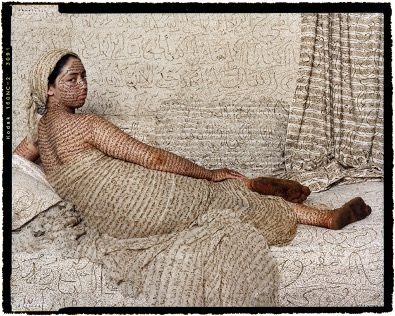
Figure 4 Lalla Essaydi, Grande Odalisque #2, 2004. © Lalla Essaydi.
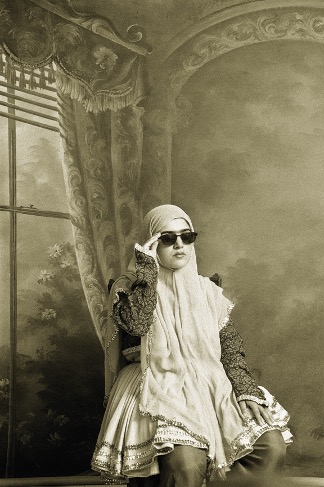
Figure 5 Shadi Ghadirian, Untitled, from the series “Qajar,” 1998. ©Shadi Ghadirian.
The exhibitions’ choices could be justified as an attempt to focus on artworks dealing with gender issues, nonetheless, they omit a longer history of women artists engaging with gender issues. In 1949, the Egyptian artist Inji Efflatoun published We… The Egyptian Women in which she discussed the issues facing Egyptian women, especially peasants, who constituted a considerable labour force in Egypt but were suffering major injustices. Stressing the necessity and urgency of equality in education, work, social and political rights, Efflatoun’s analysis focused on the intersection between social, feminist, and anti-colonial movements to achieve national liberation and women emancipation. In 1952, she had her first solo exhibition in Cairo and represented Egypt at the Venice biennale. Her solo exhibition cemented her reputation as a revolutionary artist. Efflatoun’s paintings, like her writings, highlighted the role of women in the national struggle against colonialism and addressed the social inequalities and the gender discriminations. Her most significant themes were the depictions of labour and prison. Imprisoned for her political activism as part of the communist party, Efflatoun created a series of paintings depicting inmates and the prison’s vile conditions (figure 8, 9). Her artistic style varied from surrealism (figure 7) to social realism to the last phase which she called ‘the white light’ (figure 10) where she abandoned realism and direct references to social issues and focused on depicting nature and light. Through these different artistic phases and her social and political engagement, Efflatoun became one of the most significant feminist artists in Egypt and the Arab world. But outside the region Efflatoun is rarely mentioned when referring to feminist art, and her work seldom appears in western exhibitions. And Efflatoun is not the only artist facing such disregard.[1]
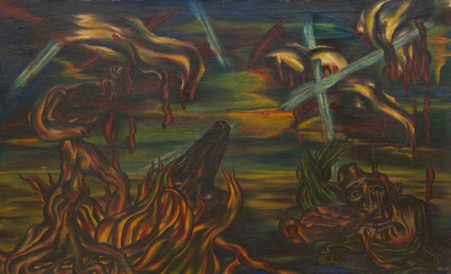
Figure 7 Inji Efflatoun, The Young Girl and the Monster, 1942. Oil on canvas, 80 x 130.5 cm. Collection of Mathaf: Arab Museum of Modern Art, Doha. ©Mathaf.
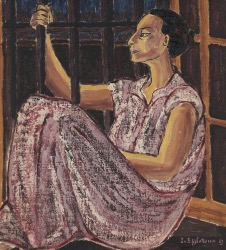
Figure 8 Inji Efflatoun, Dreams of The Detainee, 1961. Oil on Canvas, 50 x 40 cm. Collection of Barjeel Foundation, Sharjah. © Barjeel Foundation.
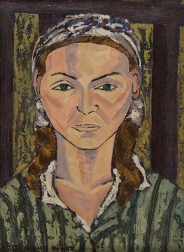
Figure 9 Inji Efflatoun, Portrait of a Prisoner, 1959. Oil on Canvas, 44 x 30 cm. Collection of Mathaf: Arab Museum of Modern Art, Doha. © Mathaf.
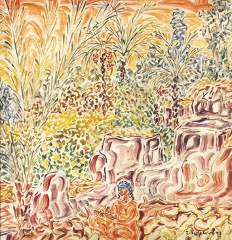
Figure 10 Inji Efflatoun, Untitled, 1973. Gouache on hardboard, 49.8 x 49.8 cm. Collection of Mathaf: Arab Museum of Modern Art. © Mathaf.
Why is Efflatoun not exhibited? While many factors could be cited as reasons, there is one that is visually evident. One of the lures of the Women of Allah series, for western institutions and audiences, was that it opened a new window to view the women from Iran, and subsequently, the Middle East. Neshat used images of veiled women and included the Persian script, hence, the topic ‘Middle eastern women’ could easily be identified by western audience. The photographs shared some similarity with the photographs of Iranian women during the 1979 revolution that were highly published in public media (fig 6).
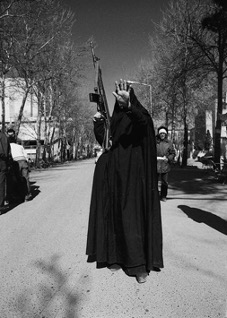
Figure 6 Kaveh Kazemi, Defiant Revolutionary, 1979
Essaydi’s and Ghadirian’s work on the other hand, resembled some of the compositions and themes of the orientalist paintings. Efflatoun’s work, however, does not offer the same elements of identification. Her paintings present women but do not offer further cultural or regional specific aspects. She addresses themes of labour, prisons, and anti-colonial struggle, which, although are related to women in MENA, are not specific to them. By highlighting the work of Neshat, and other artists whose work allows regional identification, the museums seem to be suggesting that women artists from the Middle East need to depict their subjects as “Muslim women” and to show some visual elements and traits that would not confuse the viewers and allow them to immediately identify the artist’s identity and the work’s specific theme.
What needs to be underlined here is the difference between ‘women as theme’ and ‘women as artists’, which seems to be conflated through the exhibitions and discourses. Women artists had a significant role in establishing and developing different aspects of modern art scenes in MENA. It is rare to find an art history book from the region in which women artists are not presented and discussed. Many have also been socially and politically engaged with questions of labor, justice, and liberation for decades, but this is not highlighted in the exhibitions. While more spaces are now open for women artists from MENA, highlighting their careers as artists does not seem to be the priority. The main interest seems to be in the women as theme. Most of the artworks exhibited are those addressing topics and themes related to women and gender issues. And the choices are even more specific in portraying the topic of ‘women from MENA’ explicitly represented as such with clear visual markers. Hence, the artists who create apolitical art would receive less attention. In addition, among those who do address the topics related to gender, the artworks including visual elements that allow the viewer to easily detect the topic would be exhibited more than those that address more ‘generic’ feminist or social themes. Through these choices, not only are many significant artists neglected and obscured, but also the role of women artists as creators is jeopardised as they are turned to translators of certain cultures, or even to a theme and object of curiosity based on their identity. And if that is the case for established artists, how would the younger generations of artists overcome such limitations?
[1] This article highlights the work Efflatoun, however, since the mid-twentieth century, many artists such as Ghazbia Sirry, Kamala Ibrahim Ishaq, Huguette Caland and Juliana Seraphim addressed different topics related to gender and sexuality and are yet to be recognised.